Translate

Tuesday, 23 August 2016

Three Gems from the Web - Every Tuesday (11)


Hello there,

Mondays are the "spring" of every week, they are those first mouthfuls of an incredible gelato cone, they are the first minutes of your workout or the first tunes of a song you love.

That is why every Monday I start pumped with loads of inspiration for the blog, with several topics I want to put out and write about. But this Monday is special, is the Monday after a two week holiday in a paradise. Thus the motivation, inspiration and drive are at alarming rates. So, stay tuned, if you want a slice of that :)

This week's picks are quite random but very inspiring and addictive.

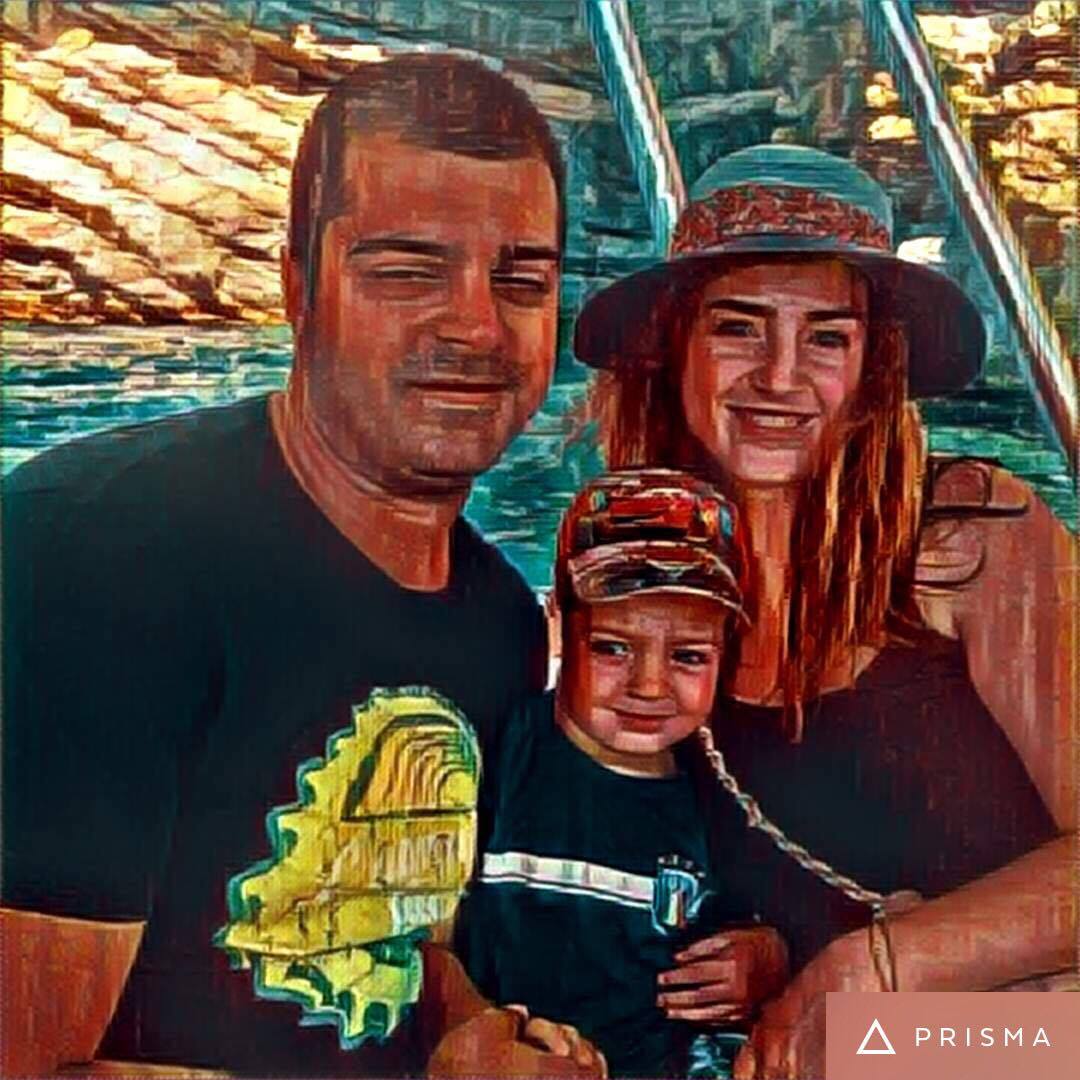
1. Prisma - this is a photo editor app, but a special one. It uses colors and geometric patterns to turn your pictures into artwork. This tool is so great to create a distinctive image of yourself or a scenery, it has several interesting filters and built in buttons to share with your friends on Facebook and Instagram. A downside is that it is getting very popular and I often got, in the last few weeks, a message from the developer that the app is not working due to too much traffic.


2. IChoose - is an app that I use whenever I want to let the universe decide for me. It's a simple app that will toss a coin or roll a dice for you when you don't have them handy. You can even play rock-paper-scissors.


3. Dashlane - is a password manager app that also works as a digital wallet in the sense that you can save your receipts and credit card info in a secure, encrypted and free app. It will basically make your life much easier. You will only have to remember one login for all your accounts and it will auto login for you without any hurdles. I am not an expert in password manager apps, by no means, but it is endorsed by the New York Times and Forbes, so it must be at least above average.


I hope you like my choices for the week and that you are well and rested after a wonderful holiday.

Have a happy Tuesday!

PS: In case you are wondering why I was rambling about Mondays, well, I write this post on Mondays almost every week, that is why.

PS2: Yes, it is us in the Prisma pictures, on a boat on our recent holiday.


Thursday, 4 August 2016

Instagram Is Introducing User Generated Censorship


Today's post is about Instagram's coming move to introduce new features available for the public, giving them the ability to censor comments, or to disable them all together. Users will be given the possibility to define words, phrases or emoticons that they don't want to appear in their profile comments. Also, Instagram will introduce the option to disable comments for specific posts. Here is a shot of what the feature might look like from a test made on a brand profile.

Source: SocialMediaToday.com

According to Washington Post and The Verge, these new features are currently tested and are due to roll out to all users in the coming weeks. This initiative is part of a generalized concern on all social media platforms towards fighting harassment. But will this move succeed in stopping harassment or will it rather hinder communication?

I am about to make a rather philosophical argument, but bare with me for a moment. Let's assume that all social media platforms will follow Instagram's example and give the users the power to censor their walls, picture comments and so on? What would this lead to?

Let's see! First of all, it would lead to fewer conversations, overall. People would make use of the new technical features to block communication when the feedback they'd receive wouldn't suit their expectations. Whereas in any communication handbook you would find that feedback in itself, positive or not, is good because it gives you a chance to adjust yourself to your peers and to alter your behavior for the better, when circumstances ask for it. If given a chance to dismiss the negative feedback in a legit way, supported by technology, some users would be ripped of the benefits of negative feedback translated into self improvement.

Secondly, it is not only the given censoring user who is consuming the content on their profile, actually, it is mainly the others who consume their content. That means that all the learning benefits that other people's embarrassment, bullying and even harassment experiences will disappear, and social media will start resembling less and less the real world. Indeed, people would witness less harassment, I will give them that, but they would also be confronted with less challenging situations that would have helped them grow, they would witness less bravery, less compelling argumentation, and less resolutions, overall.

Finally, one might argue that the changes are not that drastic, because you can already remove comments from your profiles. That is indeed a good point, but let's have a closer look.

  • Up until now, instances of people removing inconvenient comments were seen as inappropriate.  Now, suddenly, Instagram tells us it isn't the case anymore.
  • Censoring the feedback you receive, in an automatic way, will not allow comments to go up at all, which is not the case now, when you have to diligently remove the "bad" comments as they come, involving an actual human being acting in a relatively rational way. 
  • Contrary to the stated purpose of the feature, censoring will not be generally used against harassment, but against open debate, embarrassment, competitors, all of which aren't in fact felonies, but mere acts of life.
All in all, we are still to see what is coming and how it will end up being used. My concern is that these little incremental changes take the social media world in a strange direction, one that will not resemble real life anymore. And, given that, will all those kids that live their lives submerged in these platforms, remain fit for the real harsh world? 

I would love to hear your opinion on this. I promise that I will update this post with any strong points you will be raising.

Have a nice day!

Tuesday, 2 August 2016

Three Gems from the Web - Every Tuesday (10)

Free Books App
Hello,

I know most of you are on holidays right now, successfully using all the apps that I suggested in my previous post.

Today I would like to focus on reading, an activity that each and any of us should be doing more and more often, especially while relaxing on a sunbed or breathing the fresh air in a beautiful mountain resort.

Therefore, I have searched the web trying to be resourceful and found these 3 amazing appsthat I hope you will find useful:

1. Free Books - Ultimate Classics Library: available on both iOS and Android, this app provides 23,469 free classic books, written and/or audio books (and you have to know how much I love audio books). You can search and browse through the library smoothly, the app works really well with very few adds, and, most importantly, the reader is incorporated. Best part: it's free!

2. Oodles Books - the description on iTunes states: 50000 free books and audio books. The same principle as for the app above but with more adds (pop-up adds and in between book listings adds) but there are also more books. There's also an integrated reader, but not as appealing.


3. Blinkist - have you heard about this app? It is AWESOME! Especially if you are into non-fiction books. It is basically an app that gives you access to summaries of the best non-fiction books ever (well, not all of them, their library has around 1500 titles) in both written and audio. I've read or heard once that the best way to learn something is to follow-on an audio book (read while you are listening to the audio). It works for me. And they are good summaries indeed. Give it a try if you are planning a professional or personal revolution this fall. It will get you inspired, to say the least.

Happy summer you all. 

Hope you take advantage of the free time and read a little. It's a good time investment.


    Friday, 29 July 2016

    Terrorism and Social Media

    Source: spinsucks.com
    Terrorist attacks have become an ordinary happening in today's world. The more they happen, the less affected we become and the less willing to do something about it. Though, if you give it a little thought, you might realize that terrorists are a Facebook user or a google search away from you, your household and your loved ones. Indeed, terrorists are all over social media, using it to achieve the most terrifying objectives.

    Social media plays a tremendous role in reaching out to as many people as possible with low costs. This is an incentive for almost any type of organization, including the less legitimate ones, such as the those  perpetrating terrorism. According to an article in The Telegraph terrorist organizations like ISIS and Al-Qaeda have totally embraced the web and are using it at full capacity for propaganda, recruitment and fund raising. Reportedly, ISIS has a very open approach by being active on most of the social media platforms. According to an article entitled "Terror on Twitter" P.W. Singer and Emerson Brooking wrote that ISIS' posting activity has reached a peak of almost 40,000 tweets in one day, in 2014, during their invasion of the Mosul city in Iraq, when they simultaneously launched a Twitter hashtag campaign #AllEyesonISIS. Content such as video and images is daily uploaded by foot soldiers and then shared globally. In contrast, Al-Qaeda has kept a more reserved presence on social media that relies more on anonymization techniques. The same article mentions:

    "Within hours, images of ISIS barbarity spread throughout the Arab world, sowing fear among Mosul’s residents and defenders. The social-media campaign gave an air of inevitability to the looming seizure of the city, and the atrocities that would follow. Despite the fact that they outnumbered the attacking ISIS force by 15-to-1, the Iraqi army units defending Mosul disintegrated and fled. A militia of no more than 2,000 ISIS fighters captured a city of 1.5 million."


    Another article entitled "Social Media, Recruitment, Allegiance and the Islamic State" by Scott Gates and Sukanya Podder tries to render how the terrorists are using social media nowadays. It seems that ISIS has a media agency Al Hayat that has developed an "effective virtual propaganda machinery". They are constantly releasing videos and other materials that show insights from the group life style. In some content published, one can see troubling images of children holding decapitated heads, whereas in others, you see soldiers holding Nutella jars "to demonstrate familiarity with Western lifestyles". The message that they want to convey is usually about "governance, justice and new construction" by outlining the wrongdoings of the enemy and the lawfulness of ISIS. They are proving semi-proffesional skills by using "video rather than text, takes full advantage of the linguistic skills of members, and makes good use of music - all of which appears to resonate with western youth culture". The authors conclude that the online campaigns carried out by ISIS are "sustained by significant manpower. Linguistic and technical skills are clearly evident".

    ISIS has completely embraced the modern techniques of social media marketing and took their activities to a whole new level, a level that has not been reached, to this moment, by any other terrorist organization. One of the main achievement is that they have managed to expand their operations way beyond their territory through a focused, systematic and efficient propaganda. Moreover, they manage to recruit adepts from both Middle East but also Western countries, profiles that have more differences than similarities in terms of incentives for embracing such a direction, as revealed by this article. Usually the social media campaigns developed by terrorists are used for recruitment (forums, targeted recruitment), intimidation (mass execution videos), coordination (the use of tolls that provide anonymity), propaganda (press releases, tweets etc.).

    On the other hand there is an intense effort from governments, social media companies and many others to fight against online terrorism. As for now, it seems that the terrorists still hold the upper hand, by being able to always make the first move while taking advantage of fundamental rights such as freedom of speech and privacy. Therefore, the fight against online terrorism is on a developing trend as more and more organizations and governments adopt at least one fighting method.

    There are different ways of fighting terrorism online and in particular on social media, each one of them being more or less suitable for various situations. There is no best or worst solution but multiple methods can be applied in changing circumstances. Here there are, the most important ones, in a random order:


    1. Content filtering:  Technically speaking content filtering is done by the company owning the  social media platform. Almost all of them, especially the most popular ones, provide a way of reporting abusive content and some of them also have anti-terrorism policies. According to some sources such as morningconsult.com and "Terror on Twitter" YouTube cooperates with highly active human rights protection groups by making them “trusted flaggers” in order to flag ISIS content. Twitter has banned “indirect threats of violence” and specified in their policy that service providers take action on any threat or promotion of violence. Facebook proactively removes known jihadists from its service and can “remove content, disable accounts, and work with law enforcement” in cases where there appears to be a “genuine risk of physical harm or direct threats to public safety”. They also have mechanisms allowing all users to flag posts from other users that they find suspicious. At this level of shared policing  all of us can contribute by reporting anything suspicious and making the world a better place. 
    2. Counter-attack through positive campaigns: the main concept here is to try to fill the social media with positive messages aimed at countering the disinformation spread by terrorists. According to "Terror on Twitter" the U.S. government manages a series of Facebook, Twitter, YouTube, and Tumblr accounts, such as the “ThinkAgain TurnAway” series, to highlight and counter misinformation spread by ISIS. There are also multiple other examples in this area from other states. 
    3. Monitor and track: an action typically done by law-enforcement. Government agencies can get input for their actions either by "suspicious" reporting done by social media platforms and their users or through using specialized software that detects dangerous profiles or events through special algorithms. Governments have started recently to build specialized teams of experts to deal with the new threats. In January 2016 The White House announced a new task force aimed at combating the spread of terrorist networks online "Countering Violent Extremism Task Force". Although the communication is not very clear on the exact future actions of the group, provisioned activities such as research, analysis, technical assistance, communications and interventions are pretty much hinting at the areas and type of actions that will be covered. According to another article from The Guardian "the British army is creating a special force of Facebook warriors, skilled in psychological operations and use of social media to engage in unconventional warfare in the information age". Again, the available information is not very clear on what are their exact tasks, but on the British Army website you can find some basic information together with the fact that they have designated a department called Media Operations and Civil Affairs. Furthermore, a controversial approach comes from Israel, a country deeply confronted with terrorist activities, that uses social media in trying to foresee future terrorist activities based on "specially developed algorithms to monitor the social media accounts" as stated by The Economist.  This way they are able to build a list of potential suspects, and in some past cases, were actually able to stop terrorists before they deployed any attack. A similar initiative has been taken by EUROPOL who established a department called EU Internet Referral Unit. According to their first and only annual report, their job is to coordinate and share the identification tasks (flagging) of terrorist and violent extremist activities, to carry out and support referrals quickly in close cooperation with the industry and to support the EU member states in the same issues. The report mentions that they have removed 8949 types of content from the web. 
    4. Hacking: An unorthodox approach to fight terrorism was adopted by Anonymous, the famous hacking organizations. Late 2015 after the Paris attacks, Anonymous declared war to ISIS. It's not the first or the last message posted by Anonymous on this topic but real actions have also been noticed. According to a video published by Al Jazeera, 39.000 Twitter accounts were uncovered by them and most of them closed. In other cases DDoS and other hacking attacks were reported targeting ISIS websites. 
    5. Legislation: there are also initiatives, although in incipient phases, of regulating the way social media platforms should respond to the terrorist threat. A bill entitled "Requiring Reporting of Online Terrorist Activity Act" was recently reintroduced in the US Senate in December 2015. As described on the Congress website "this bill requires an electronic communication or remote computing service company that obtains actual knowledge of terrorist activity to report relevant facts and circumstances to appropriate authorities". The bill was dropped in the past due to oppositions from tech giants under the justification that "would turn private social media companies into government enforcers" as stated by the morningconsult.com article mentioned above. Nevertheless new efforts are made now to revive the bill and pass it.

    We might conclude that the social media has become a battle field, following on the trend of the overall cyberspace, that has even been declared an operational domain by NATO in June 2016 joining the other already existing four air, sea, land and space. We are now assisting to a tremendous arm race on social media where platform owner are playing an increasingly important role. Future policies in this area need a lot of attention and a coherent development, as social media, as a disruptive innovation, has already started revolutionizing the media and internet industries. In the fight against terrorism the right balance between law-enforcement, privacy and freedom of speech must be achieved and protected.

    Tuesday, 26 July 2016

    Three Gems from the Web - Every Tuesday (9)

    Hello there,

    How are you doing? I imagine you are either on holiday, or planning one, or maybe recovering from one. So since it is clear that we are all into the holiday topics more than into anything else, I am here to suggest to you three gems related to ... what else? ... HOLIDAYS.

    1. Here - if you don't know this app yet you are missing out. It is the best GPS you can have on your smartphone, and you don't need Internet. Nevertheless, you need to download your maps in advance. So plan your travel well, and go discover without fear of getting lost or huge roaming bills for data traffic. 
    2. WiFi Map - is a great app that you will find extremely useful when traveling or when you are out and about in the city. It will give you the nearest wifi networks together with ... THE PASSWORDS (how great is that?). So make sure to install this app before you go on holidays and you will be able to post fresh photos on your social media literally everywhere. And since we are talking mobile data traffic, try installing Onavo Extend to make better use of your mobile data plan. This app will help you get much more traffick for the buck you spend on your mobile internet subscription and that is particularly important when you are traveling abroad, is it not?

    3. SunSmart- its name is relatively straight forward, it's a sunscreen reminder app. Nevertheless, using this app will make you feel much better about your exposure to the sun, especially when you have kids. It's free and rather basic, but very much used by us.

    Hope you liked our picks. There are dozens of other useful things out there. Never forget to check Airbnb for alternative accomodation options, Skyscanner for alternative air ticket flights, and Uber or Waze to help you get around.

    Happy holidays!

    PS: I put in the links to the iTunes versions of the apps, but they are all available for free on GooglePLay for Android users as well.

    Thursday, 21 July 2016

    10 Consequences of the Quantified Popularity

    People now have a direct measure of their popularity, and this can be really daunting, especially for those who are not realistic about their social abilities. Although some might argue that the number of people in our social networks doesn't  necessarily reflect on our actual popularity,  my informed guess is that it does say something about our perceived sociability. Nonetheless, although numbers do say something, if you don't take the time to verify the data through "qualitative " methods, sheer numbers can be very misleading, just like in statistics.

    Dr. Robin Dunbar, an evolutionary psychologist at the University of Oxford, came up with a piece of research about the effects of nurturing friendships and social connections on people's lives. He uncovered the tremendous health benefits of having true and meaningful relationships and, most interestingly,  he tried to quantify the average amount of social connections people generally have. Therefore, he revealed what is now called the "Dunbar number", stating that people generally establish between 100 and 200 social connections (commonly referred to by its average, 150).

    Nowadays, roughly 10 years into the social media era, having 100 or 200 connections would categorize us as being socially disconnected or unpopular. What is, then, the magical number? How should we navigate in today's life without feeling unworthy of attention or unpopular?

    These are questions people commonly struggle with for fear of being left out. It is all due to the culture of showing off, to the building of social media personas that don't have much to do with our real selves, and to the lack of privacy and moderation that social media interactions incur.

    So how then, does the quantified popularity affect us and the people around us?

    1. We are encouraged to become friends with people we don't really know - that poses threats to our well being as well as disconnects us from our true friends by watering down our connections.
    2. We get worn out - following so many people's activity on SM as a result of the competition for new connections, gets people exhausted and not very eager to establish connections in real life and be authentic and curious about them. 
    3. We never feel popular enough - there will always be more popular people out there, and we will always want to acquire more popularity to become like them, which can have us go down into a negative spiral. Back in the day when you didn't have an exact measure of other people's popularity or your own, you relied on feelings, sensations, feedback from peers, actual smiles and rejections that helped you alter your behavior and shape your personality in accordance with whom you wanted to become . It is now only likes and shares, that can mean an infinite amount of things.  
    4. Popularity feeds off itself - not many people realize that social media popularity increases in a geometric progression, just like investment money or disease spreading. The more people you have in your network, the more chances of people seeing you and getting connected with you. That is why is far more hard to get your first 100 connections than to get from 3200 to 3300 connections. 
    5. Popularity equals loss of privacy - the loss of privacy is twofold. On one hand, you have to expose yourself by generating interesting content such as photos, videos, text or shared content, and on the other hand, you have to give up on your entry barriers into your online community. The consequence, is getting more and more exposed to people that you know less and less.
    6. If you want to revert, it can backfire - imagine that you might, one day, want to decrease your network to gain more privacy, or might want to change the nature of your online presence without losing popularity. This is a very risky and complex process, people might get offended with real life consequences, as well as you might get offended or even disappointed or depressed. 
    7. Unless you have a purpose, working up your popularity on Social Media is an utter loss of valuable time - that is probably why SM networks are becoming more and more commercial, because unless you can actually sell your popularity online, trying to be popular is a merely vain and unproductive enterprise.
    8. We dilute our messages - as a consequence of going over our real life popularity we have to rationalize more our interactions and become less authentic. As a result, we end up diluting our messages, connecting less and shouting more. We start using catchy short sentences with emoticons and question marks instead of real phrases and real dialogues with people.
    9. We devalue feedback - although is such an important part of life and the sign of true communication and learning, more often than not, when we think only of our SM popularity we deter feedback. Feedback frightens us, eats up our resources, engages us emotionally, detracts us from our path, makes us human. So what do we do? We ignore it, we diminish its importance by aggregating it and turning it into graphs, we take pride in sticking to our plan in spite of criticism and we focus our resources on producing new content instead of reaching out to people, because our purpose is not communication, but popularity.
    10. A false sense of status - SM popularity can confer a certain degree of social acclaim or fame, but building up one's status is a complex affair that involves real life interactions, approval of peers, reputation and long term commitments to a cause with outstanding results in the process. And while I am not saying that one excludes the other, falsely taking social media popularity as status could lead the most naive of us spending their valuable resources on a false cause. 
    I am sure there is plenty more to talk about around the popularity topic. The reason I am speaking about it is because I believe I could add up to a conversation that although it is of great importance is being left out and ignored. Social media feeds itself from out need of approval, social status, belonging and being valued by our peers. It is also very customary to use shortcuts in judging other people, so that, more often than not, we would rather  look at the numbers on Facebook or Twitter rather than engage in a thorough interaction with the people we are interested in. And all at the expense of true interaction, true communion, that scientists such as Robin Dunbar have proved to be of such great importance to our health and well-being.

    Now it is your turn to let us know what you think. Use any of our handles below or the comment section on this page. Have a great day!

    Facebook: @newsocialmediageek
    Twitter: @socialmgeek

    Tuesday, 19 July 2016

    Three Gems from the Web (8) - Every Tuesday

    Hello everybody!

    Not sure you've realized I missed last week's Tuesday, but in case you wonder, we had a little "off" time, but we are now back with fresh ideas and good vibes. :))

    It was hard to pick the three gems this week because we've discovered plenty of new things in the best way possible, by interacting with people in real life. One big conclusion after a week ( it is actually more than two weeks) of mainly offline living is that technology, if used smartly and wisely, is a huge enhancer of joyful and productive living.

    For this week, I am suggesting a game, an App and a YouTube channel. As usual, I am focusing on digging out entertaining and/or useful software and websites

    1. For those holiday nights with friends and family make sure at least one of you has this game installed on their phone: Heads Up. It will cost you 1 Eur on AppStore but you can find free alternatives if you don't want to pay. This is basically a charades game in which players mimic or use signs/words to help the one of you holding the phone on their forehead guess what is written on the screen. One tilt of the phone will change the screen to the next word or phrase to discover. This game is especially entertaining as you add up the time pressure and the nice video feature that allows you to see who's mimicking was the funniest!

    2. DragonDictation is a free app that has proven to be very useful for me in the last few months. It is a versatile app that can help you take notes, dictate emails or social media posts, and even start writing an essay, article or blog. That helps you make full use of your most inspired moments, be them during a stroll in the park or on a sunbed at the beach.

    3. SciShow is a friendly and extremely interesting science channel on YouTube where you can make your procrastination episodes add up to your general knowledge. The channel displays short clips (less than 5 mins each) in which they explain mundane or curious things or phenomena in a scientific yet approachable manner. In my opinion, it is extremely useful for teenagers and students among which it has a huge followship (3,5M subscribers).

    Hope you liked our picks. Check them out and let us know what you think.

    Have a great Tuesday, wherever you are!